Forging

Producing durable, high-strength metal parts through controlled deformation — delivering superior grain structure and mechanical properties for the most demanding aerospace, automotive, and industrial applications.

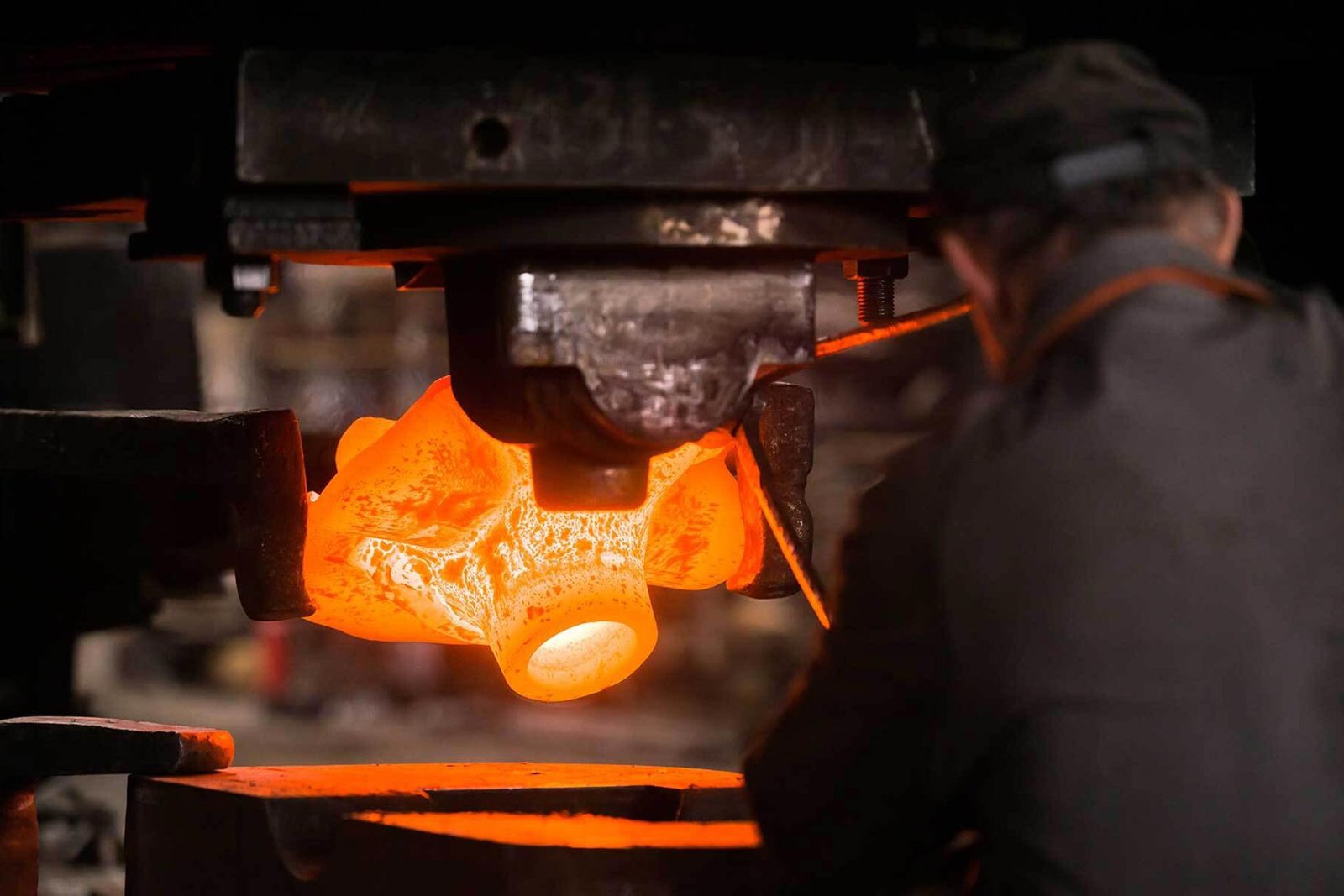
Forging process at GM Industries

Strength Through Deformation

Forging shapes metal using localized compressive forces, aligning the internal grain structure to follow the contour of the part. This results in components with superior strength, fatigue resistance, and impact toughness compared to cast or machined alternatives.

GM Industries provides a full spectrum of forging services including open die forging for large custom shapes, closed die (impression die) forging for high-volume precision parts, and ring rolling for seamless rings and flanges used in critical rotating assemblies.

Request Forging Quote ›
🔨
Open Die Forging
Metal is compressed between flat or simple-contour dies without being fully enclosed. Ideal for large shafts, discs, and custom shapes with weights from a few kilograms to several tonnes.
⚙️
Closed Die Forging
Metal is pressed into a die cavity that contains the shape of the finished part. Produces near-net-shape components with excellent dimensional accuracy and minimal material waste.
🔘
Ring Rolling
A specialized process that produces seamless rings by expanding a hollow preform between rollers. Creates high-strength flanges, bearing races, and gear blanks with continuous grain flow.
Why Forging

Advantages of Forged Components

Forged parts consistently outperform cast and machined alternatives in strength, reliability, and fatigue life across demanding applications.

💪
Superior Grain Structure
The forging process aligns the metal's grain flow to follow the part geometry, eliminating porosity and voids found in cast parts and creating a dense, uniform microstructure.
High Strength
Forged components exhibit significantly higher tensile and yield strength compared to castings or bar stock. The work-hardening effect of forging enhances mechanical properties throughout.
🛡️
Exceptional Durability
The continuous grain flow and absence of internal defects give forged parts outstanding fatigue resistance and impact toughness, ensuring long service life under cyclic loading.
How It Works

The Forging Process

Each forging operation follows a carefully controlled sequence to achieve optimal material properties and dimensional accuracy.

01
Billet Preparation
Raw material is cut to size and heated to the precise forging temperature in controlled atmosphere furnaces for uniform deformation.
02
Die Setup
Precision-machined dies are installed and preheated. Die design accounts for material flow, flash, and draft angles to ensure complete cavity fill.
03
Forging
The heated billet is placed in the die and subjected to controlled compressive force from hydraulic presses or hammers to achieve the desired shape.
04
Finishing
Flash is trimmed, the forging is heat treated for optimal properties, and final machining brings critical surfaces to specification.
3
Forging Methods
5+
Metal Alloys
2x
Strength vs Cast
10x
Fatigue Life
Materials

Forging Materials We Work With

We forge a comprehensive range of metals, each selected for its specific mechanical and environmental performance characteristics.

Carbon Steel
High strength, cost-effective
Alloy Steel
Enhanced toughness, wear resistance
Stainless Steel
Corrosion-resistant, hygienic
Titanium
Lightweight, high strength
Aluminum
Lightweight, good formability
Applications

Where Forged Parts Excel

Forged components are the standard choice for safety-critical applications where failure is not an option.

✈️
Aerospace Fittings
Structural fittings, landing gear components, and engine mount brackets forged from titanium and high-strength alloy steels for flight-critical applications.
🚗
Automotive Crankshafts
Forged crankshafts deliver superior fatigue strength and balance compared to cast alternatives, ensuring reliable performance under high-RPM cyclic loading.
💧
Hydraulic Cylinders
Forged cylinder bodies and piston rods withstand extreme pressures and dynamic loads in construction, mining, and industrial hydraulic systems.
⚙️
Connecting Rods
High-performance forged connecting rods for internal combustion engines, compressors, and pumps requiring exceptional fatigue resistance at high RPM.
🔧
Flanges & Fittings
Ring-rolled flanges and forged pipe fittings for oil and gas, petrochemical, and power generation piping systems operating under high pressure and temperature.
🛠️
Gear Blanks
Forged gear blanks with optimized grain flow for automotive transmissions, wind turbine gearboxes, and heavy industrial drive systems.

Need High-Strength Forged Components?

Share your specifications and drawings. We respond within 4 business hours with a detailed forging quote.

📧 Get a Quote 💬 WhatsApp Us